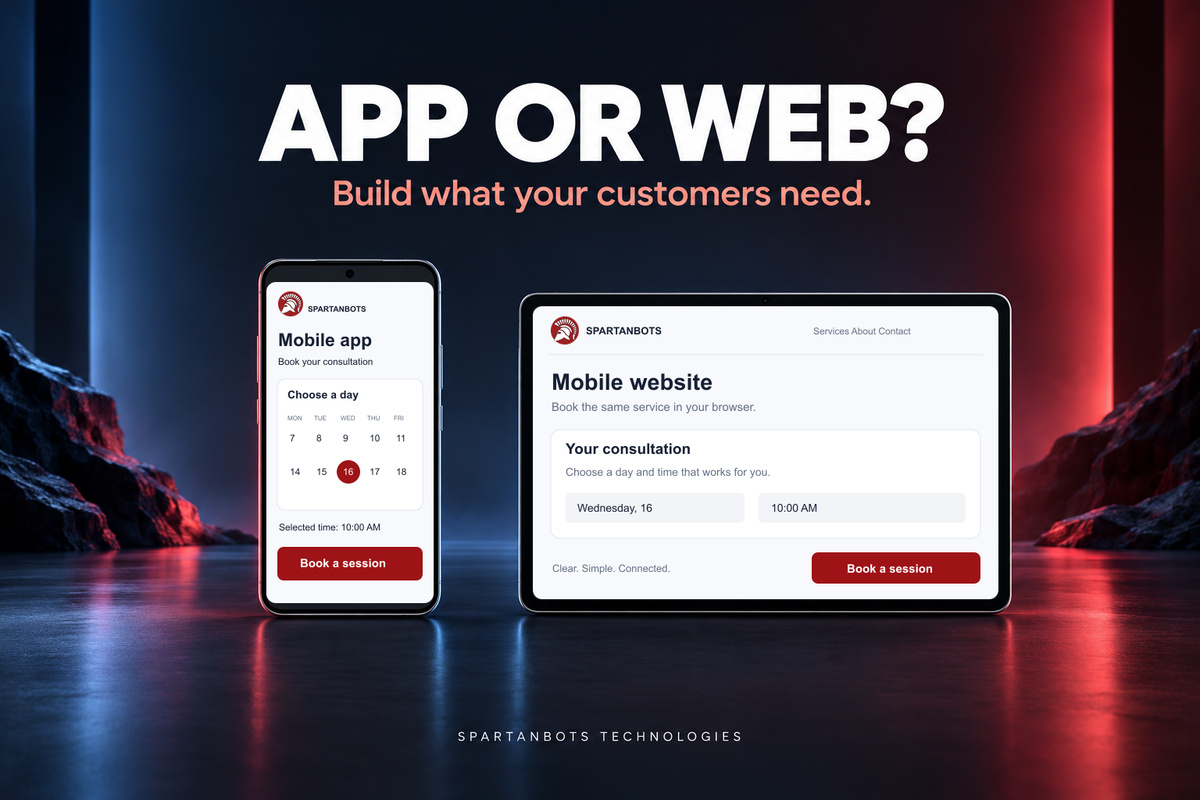
A customer opens your website on their phone to book an appointment. The text is small, the form asks for too much information, and finding an available time takes several attempts. They leave before confirming. Your team sees the abandoned booking and reaches a familiar conclusion: “We need an app.” But would installing an app have made this customer more likely to finish?
Perhaps. It is also possible that a clearer mobile website would have solved the problem with less effort for everyone. Choosing between a mobile app and a mobile website begins with understanding what customers need to do, how often they do it, and what currently gets in their way. The right product should make their task easier and give your business a practical way to support it.
Key Takeaways
- Phone usage alone does not establish a need for an app.
- Occasional visitors and returning customers may need different experiences.
- Identify the specific benefits an app would provide.
- Include maintenance, support, and adoption in your planning.
- Start with one customer journey and test the assumptions behind your choice.
Look at the Task Before Choosing the Platform
Customers usually arrive with a purpose. They want to compare services, place an order, check a booking, or complete part of their working day. Your first question should be whether they can do that task comfortably on a phone. Watch where the current experience becomes difficult. Slow pages, unclear instructions, and unnecessary fields need attention regardless of which platform you choose.
Next, consider how often the task happens. Someone researching a service for the first time may prefer opening a link and finding an answer immediately. A customer who manages appointments or completes daily work through your product may have a stronger reason to keep an app installed. Frequency does not decide everything, but it helps distinguish a convenient mobile interaction from an ongoing product relationship.
Give Customers a Reason to Install
An app introduces another step between interest and use. Customers need to find it, download it, and usually sign in. That effort can be worthwhile when the experience provides a clear benefit. A field employee who records work throughout the day may value an application designed around that routine. A visitor looking for your opening hours probably has a different expectation.
Write down the reason someone would choose to install your app in one sentence. “Customers can manage their weekly training plan and record progress in one place” explains a useful purpose. “Our competitors have apps” does not explain what your customers gain. If the benefit remains unclear, speak with users and review their behaviour before committing to development.
| Customer need | Questions to explore |
|---|---|
| Finding services or comparing options | Can a clear mobile website complete the journey? |
| Making an occasional booking | Would installation create unnecessary effort? |
| Managing frequent account activity | Would an app make returning tasks easier? |
| Working with limited connectivity | What must remain available without a connection? |
| Using phone hardware during a task | Which capabilities are essential, and how reliably must they work? |
| Receiving timely updates | What updates are useful, and how should customers control them? |
Compare the Complete Experience
It is easy to compare platforms through a feature list and overlook everything around them. Consider how customers discover the product, create an account, recover access, and get help. Think about staff responsibilities too. Who will update content, manage customer records, and investigate failed actions? A polished interface still needs dependable systems behind it.
Some browser and device capabilities vary across operating systems and environments. If your product depends on offline work, background activity, notifications, or hardware access, your development team should test those requirements on the devices your customers use. Avoid choosing a platform based on a broad promise that it supports a feature. Confirm that it supports the particular behaviour your workflow needs.
An Illustrative Example: A Training Business With Two Audiences
Imagine a personal training business serving new visitors and existing members. A new visitor wants to understand the programmes, compare prices, and book an introductory session. A fast mobile website with clear information and a straightforward booking process could support that journey well. Requiring an app before they can explore the service would add a commitment before they know whether the business suits them.
An existing member has different needs. They might check a training plan several times a week, record completed sessions, and review progress with their trainer. Those repeated activities could justify a dedicated app if members value the convenience. This hypothetical example shows why the answer can involve both platforms, with each serving a defined purpose. The business would still need to validate demand and decide what to build first.
Engineering note: A website and an app can use shared backend services for accounts, bookings, and other records. Define those services carefully so both interfaces work with consistent information. Shared data does not remove the need to test each platform’s sign-in, permissions, error handling, and update behaviour.
Budget for What Happens After Launch
The initial build is only part of the commitment. Apps need ongoing testing, release management, and attention to supported devices and operating systems. Websites also require maintenance, security updates, performance checks, and browser testing. The practical comparison is the total effort needed to deliver and maintain the experience your customers depend on.
Adoption needs a plan as well. If you launch an app, where will customers learn about it, and what will encourage them to use it again? If you improve the mobile website, how will you know whether the change helped? Agree on a few meaningful measures before development. Completed bookings, successful orders, repeat use, and fewer support questions can provide more useful evidence than download numbers alone.
Validate the Decision With a Smaller First Step
You do not need to build every proposed feature to learn whether the direction makes sense. Start with the customer journey that matters most and identify the assumptions behind it. Perhaps you believe customers want to book again quickly, or staff need to record information while away from a desk. Test that need through interviews, a prototype, or an improvement to the existing experience.
Use the findings to shape a focused first release. If customers already struggle with account setup or unclear pricing, solve those problems as part of the journey. Moving them into a new app will not automatically resolve the confusion. A deliberate first version gives you a clearer way to learn what people use and where the next investment should go.
How SpartanBots Technologies Can Help
SpartanBots Technologies develops web applications, mobile apps, and the backend systems that support them. Planning starts with the people using the product and the tasks they need to complete. From there, the work can define a suitable platform, a focused first release, and the integrations needed to keep information consistent.
If you are deciding whether to build an app or improve your website, bring the customer journey to the conversation first.
Discuss your web or mobile project with SpartanBots Technologies.
Frequently Asked Questions
Does every business need a mobile app?
No. The decision depends on customer tasks, usage patterns, and the benefits an app would provide. A well-designed mobile website may meet the needs of many businesses.
Can we launch a website first and add an app later?
Yes. Planning shared accounts and backend services can support that approach. Discuss future requirements early so the first build provides a sensible foundation.
Is an app always faster or easier to use?
No. Performance and usability depend on how the product is designed and built. Test the actual customer journey rather than assuming the platform guarantees a better experience.
Gaurav Tripathi
Gaurav is the founder of SpartanBots Technologies and a full-stack developer. He helps businesses turn ideas into practical software, from SaaS platforms and marketplaces to web, mobile, and AI solutions. He writes about product planning and the technical decisions behind building better software that solves real problems for growing businesses. He brings a hands-on perspective to the challenges teams face as their products grow.