Your product idea starts with one clear problem.
Then the feature list grows.
Someone suggests a mobile app. A competitor has an AI assistant. A potential customer wants detailed reports. Before long, your first release looks like three different products.
This is where many founders face a difficult choice.
What should you build now? What can wait?
A SaaS MVP is the first usable version of an online software product. It includes enough to solve a real problem and learn from customers.
It should feel focused. It should also work properly.
Here is a practical way to choose what belongs in it.
Key takeaways
- Start with one type of customer and one important problem.
- Include the steps needed to finish a useful task.
- Keep advanced features separate from launch requirements.
- Protect customer data from the start.
- Use customer behavior and feedback to guide the next release.
Start with the problem, not the feature list
Imagine you want to build software for small cleaning companies.
Their main problem is missed bookings. Staff manage appointments through calls, messages, and spreadsheets. Changes get lost. Customers do not always receive confirmation.
Your first goal could be simple:
Help a cleaning company schedule a job and keep everyone informed.
That goal gives you a way to judge each feature.
A booking calendar supports it. A confirmation message supports it. A staff assignment supports it.
A social feed probably does not.
Write your own goal in one sentence:
“We help [a specific customer] complete [an important task] without [their current frustration].”
If that sentence is unclear, spend more time talking to potential customers before building.
Build one complete customer journey
A small product still needs to help someone finish the job.
For the cleaning business example, the journey might be:
- Create an account.
- Add a customer.
- Schedule a cleaning.
- Assign a team member.
- Send a confirmation.
- Update or cancel the booking.
These steps belong together.
A calendar without a way to change a booking leaves the task unfinished. A confirmation system that sends the wrong time creates more work.
Think about what happens when something goes wrong, too. Customers make mistakes. Plans change. People forget passwords.
Your first release should handle the ordinary problems that come with its main task.
Sort features into three simple groups
You do not need a complicated scoring system to begin.
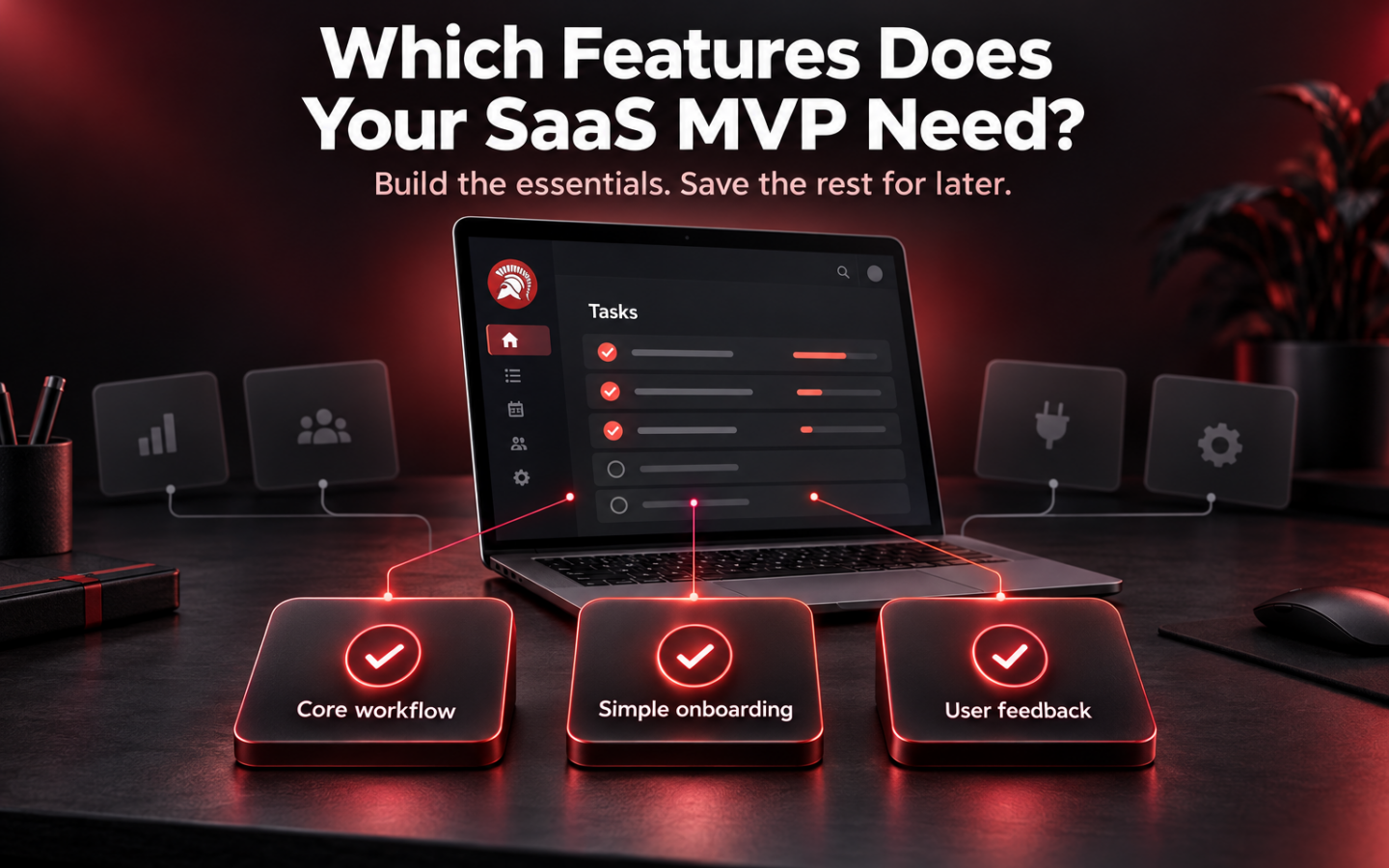
Use three groups: build now, handle manually, and consider later.
| Feature | Starting decision | Reason |
|---|---|---|
| Create and edit bookings | Build now | This solves the main problem. |
| Assign staff to a job | Build now | The team needs to know who is responsible. |
| Send booking confirmations | Build now | Customers need clear appointment details. |
| Help import early customer records | Handle manually | A small number of accounts may not need an import tool yet. |
| Custom report designer | Consider later | Basic information may be enough for early users. |
| AI scheduling assistant | Consider later | First learn where scheduling actually causes difficulty. |
| Separate mobile app | Consider later | Check whether a mobile-friendly website meets the initial need. |
These are example decisions. Your customers may need something different.
A delivery team working with poor internet access could need a mobile app from the beginning. A reporting product may need detailed reports as its main feature.
The right choice depends on the problem you promise to solve.
Ask five questions before adding a feature
For every proposed feature, ask:
- Who needs it?
- What task does it help them complete?
- Can they get useful results without it?
- What evidence shows that it matters?
- What will it take to build, maintain, and support?
The last question is easy to overlook.
A feature creates work after launch, too. Someone must test it, fix problems, answer questions, and keep it working as the product changes.
If you cannot explain its value clearly, place it on a separate list. Revisit it when you have better information.
Decide how payments will work
If customers will pay for your first release, make the payment process clear.
They should understand the price, what they receive, and how to cancel.
You may need subscription billing inside the product. For a small pilot, an agreed invoice process might be enough.
Make this decision early. It affects account access, customer support, and what happens when a payment fails.
Avoid building several pricing plans just because competitors have them. Start with an offer you can explain and deliver.
Keep the product small without cutting essential care
Fewer features can mean less work. It should not mean careless work.
Customers still need a reliable way to sign in. They need clear error messages. Their information should be available only to the right people.
Before launch, review:
- Account access and password recovery.
- Customer data permissions.
- Backups and how information can be restored.
- Forms, buttons, and common error situations.
- The experience on phones and smaller screens.
- A simple way to contact support.
Some products need additional checks because of the information they handle or the industry they serve. Discuss those needs before development starts.
Learn from what customers actually do
After launch, ask customers to show you how they use the product.
Watch where they pause. Notice where they return to a spreadsheet or send a message outside the app.
Useful questions include:
“Which part saved you time?”
“What was difficult to finish?”
“What did you still have to do manually?”
“What would stop you from using this again?”
Look for repeated problems. A request from one customer can be useful, but it should not automatically set the direction for everyone.
Also pay attention to whether customers return. A feature can sound exciting in a meeting and still go unused.
How SpartanBots helps you plan the first release
At SpartanBots Technologies, we help businesses turn product ideas into clear development plans.
That starts with understanding the customer, the problem, and the work the software needs to support.
For a SaaS MVP, we can help you define the first release, design the screens, build the application, connect the services it needs, and improve it after launch.
We also discuss what can wait. A useful development partner should help you make those choices before they become expensive changes.
Explore our MVP development services or learn about our SaaS development services.
Frequently asked questions
How many features should a SaaS MVP have?
There is no fixed number. Include what customers need to complete the main task. A feature count matters less than whether the product delivers a useful result.
Does an MVP need to look polished?
It should be clear, consistent, and easy to use. You can keep the design simple. Customers should still understand what to do and trust that their actions worked.
Should we add AI to the first version?
Add it when it helps solve the main problem. If customers can get the same result through a simpler approach, test that approach first.
Can we launch without a mobile app?
Sometimes. A mobile-friendly website may be enough. The decision depends on how customers work and whether they need phone features or access without a reliable connection.
When should we add more features?
When customer use reveals a clear need. Fix the steps that cause difficulty before adding more choices and screens.
Have an idea but an unclear feature list?
Bring us the problem you want to solve and the features you are considering.
We can help you work out what belongs in the first release and what can wait.
Gaurav Tripathi
Gaurav is the founder of SpartanBots Technologies and a full-stack developer. He helps businesses turn ideas into practical software, from SaaS platforms and marketplaces to web, mobile, and AI solutions. He writes about product planning and the technical decisions behind building better software that solves real problems for growing businesses. He brings a hands-on perspective to the challenges teams face as their products grow.